|
Information Page Links:
Featured Hose Reel Manufacturers
About Hose Reels
Hose Reel Terms
Hose Reel Associations
Hose Reel Resources
Trade Shows
Featured Hose Reel Articles
More Articles
|
|
About Hose Reels
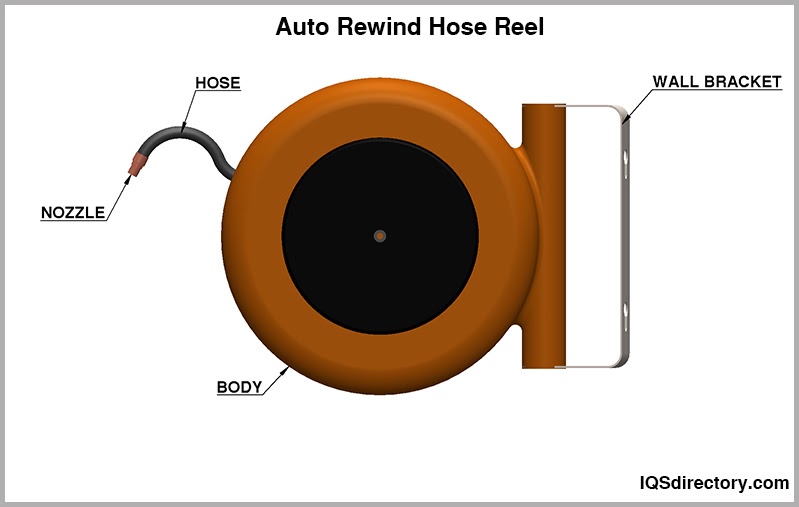
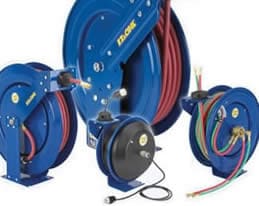
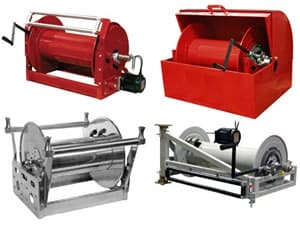
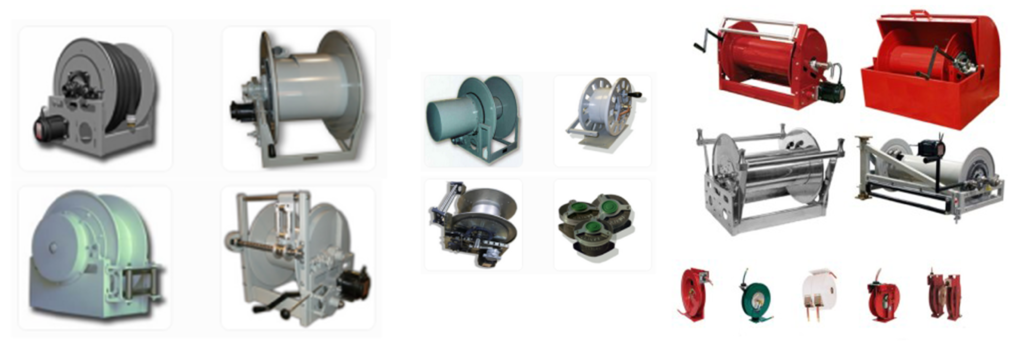
A hose reel is a cylindrical device around which any
variety of hoses can be manually or mechanically wound. Most hose reels
feature a side-mounted handle for winding and unwinding. Others utilize
electric, spring or air (pneumatic) power to unwind and wind the hosing
with minimum effort. The purpose of hose reels is to keep hoses neat
when not in use and kink free when being used. Hoses lying out are a
tripping hazard to employees and customers. Hose reels prevent this danger
and also prolong the life of the hose.
Hose reels have different retraction options. A manual hose reel has
no automatic retraction mechanism but is equipped with a hand-turned
crank. A motor powers the retraction mechanism in electric, hydraulic
and pneumatic hose reels. In a spring reel, an internal spring is used
to retract the hose. In some spring hose reels, the spring motor is hermetically
sealed to completely isolate it from dirt and moisture. Many hose reels
come with a latching mechanism that assures positive extension stop and
easy retraction at any length.
Hose reels are manufactured to meet requirements for a variety of applications.
Smaller versions are able to house smaller diameter and lighter hosing
such as garden hoses. A hose reel used for fire department and construction
hoses will be built larger and more rigid to support the extra length
and load. There are certain reels that are utilized solely for transportation
and others that are used for transportation and storage. Some hose reels
allow the use of the hose while it is still wound up. These hose reels
provide easy access and storing efficiency, which is what draws consumers
towards them.
There are several reasons hose reels fail. If spring motors are exposed
to the atmosphere, they will eventually rust and break. A latching mechanism
made of thin sheet metal or cast aluminum doesn’t wear well. Leaks
often occur because of the improper design of sealing capabilities. Some
reels have fairleads that do not reach the full width of the reel, causing
hose buildup. Fairlead arms made of light material, such as pressed tin,
will bend when the hose returns. A base made of pressed sheet metal with
Tac-welds will soon crack from vibration. Cheek plates with an improperly
formed rim or no forming will end up bending and cracking.
Featured
Articles
http://www.myreels.com/garden_hose_reels.html
http://www.adpub.com/ctimes/features3/HoseReels.cfm
Types of Hose Reels
- are designed to house air hosing,
which is typically small in diameter.
- retrieve the hose by themselves with the use
of batteries, electricity or water or air pressure.
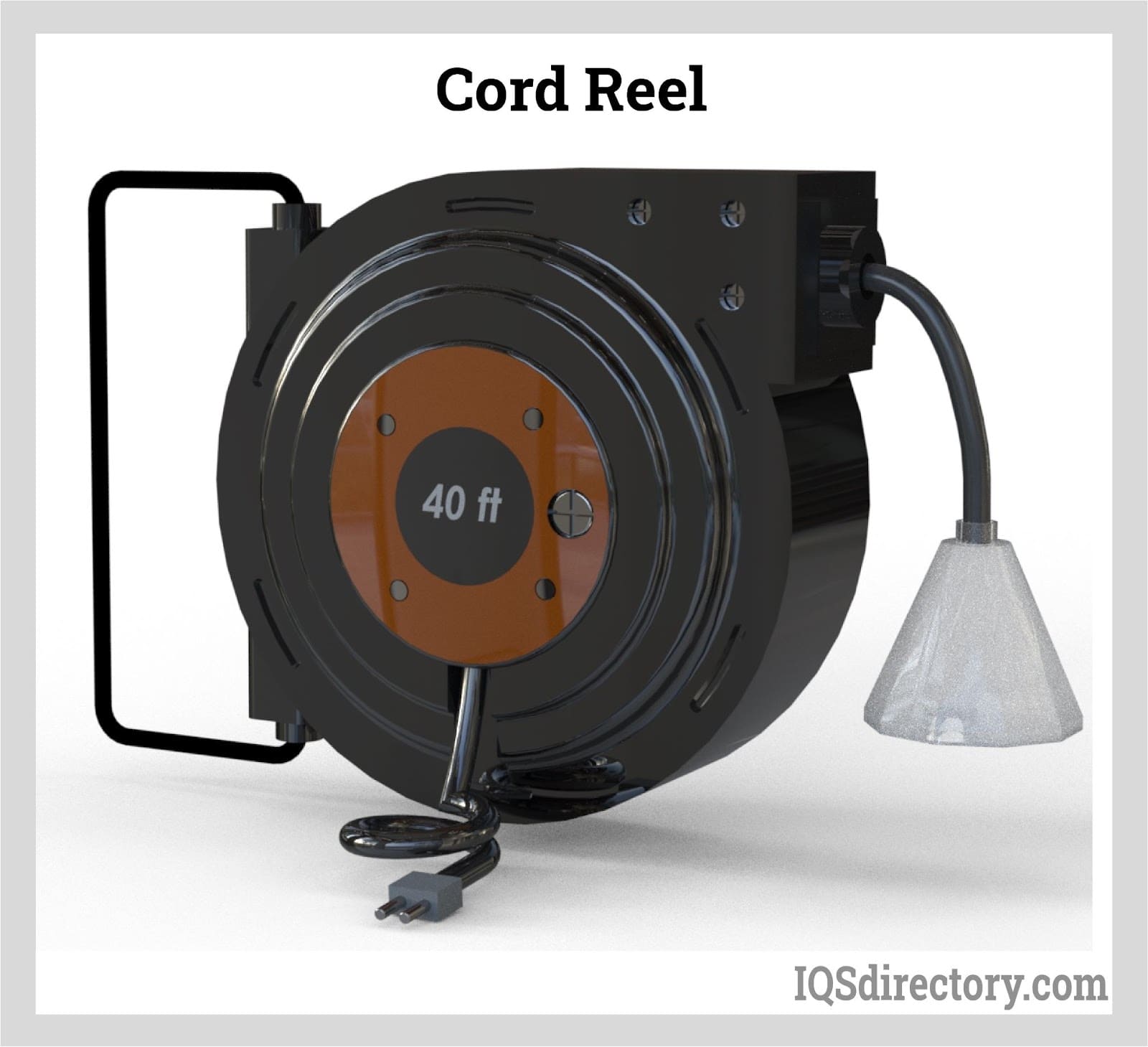
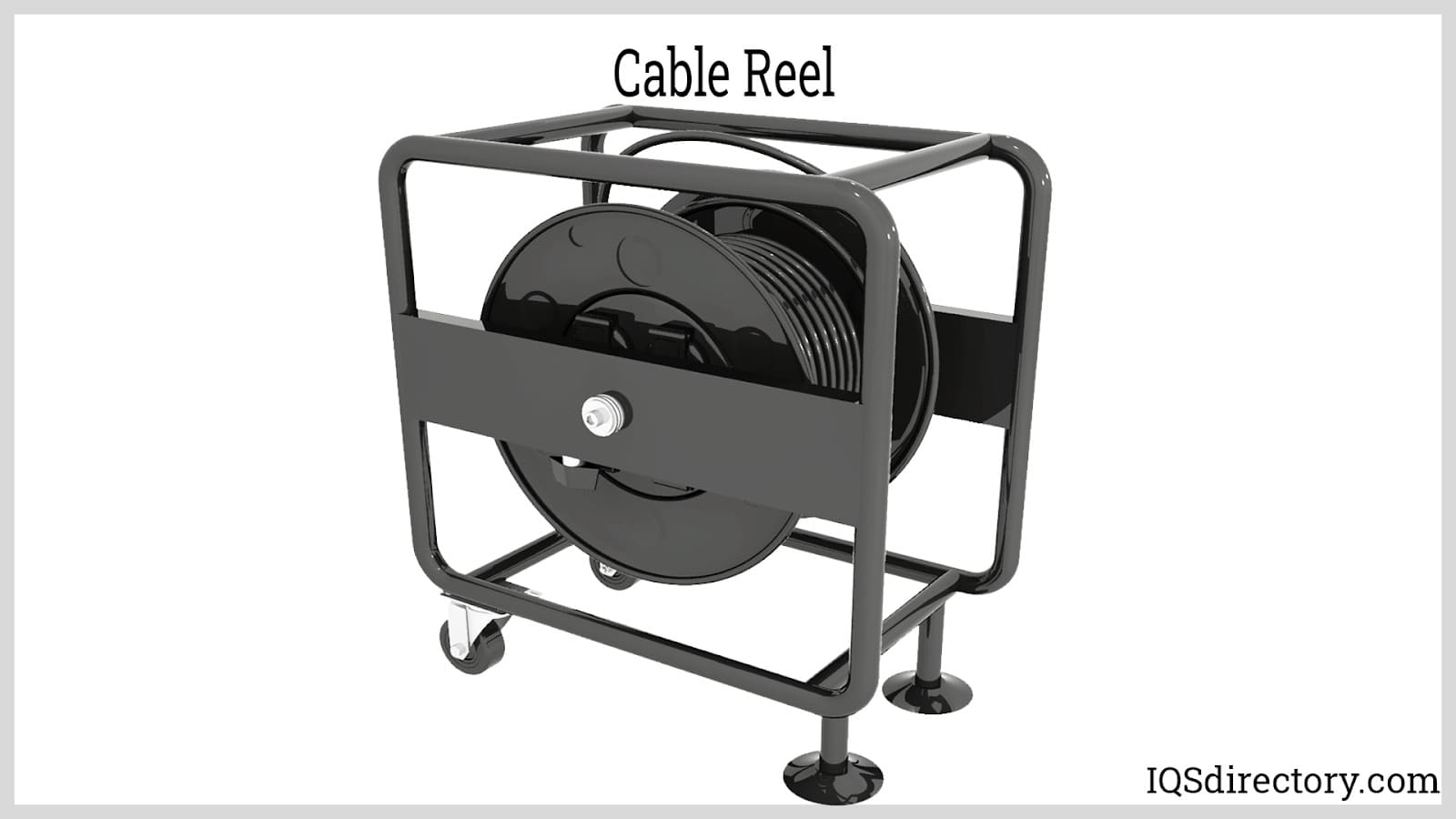
- are reels designed to hold cables for electrical or other
industrial purposes.
- store, pay out and automatically rewind electrical cable
and are used to power mobile machinery from a stationary power source.
-
are reels that utilize electric power to wind and unwind hosing, instead
of requiring mechanical power. They are useful in situations where heavy
hoses are continually used and relocated, such as in airplane refueling
applications.
- are designed to give easy access to a plentiful supply
of water. They provide ample protection in high risk areas that require
more than a nine liter fire extinguisher, such as large schools,
hotels, warehouses, factories, concert halls and theaters.
- are utilized in applications necessitating high
product flow and/or longer hose length.
- are self-retracting devices that reel the telephone
cord into a small, portable storage container.
- have cranks to retract and store the hose.
- are spring-driven retracting mechanisms suitable for
industrial, farm, commercial and greenhouse applications.
- are used to ground equipment that is operating
in a hazardous atmosphere. When properly grounded, the reel
gets rid of any static electrical buildup, which in turn decreases
the chance
of sparking and a potential explosion.
- are cylindrical cranks that a water hose can be manually or mechanically wound around.
|
|